Wall and Ceiling Crack Repair in Tarboro
Wall and ceiling crack repair in Tarboro is mostly about one question: why did the crack open? Filling a crack with compound and painting over it covers it only until the next season, but a crack that moves reopens unless the repair gives it something to hold.
Calling puts the repair on the books; a local pro then goes over the damage with you and prices it.
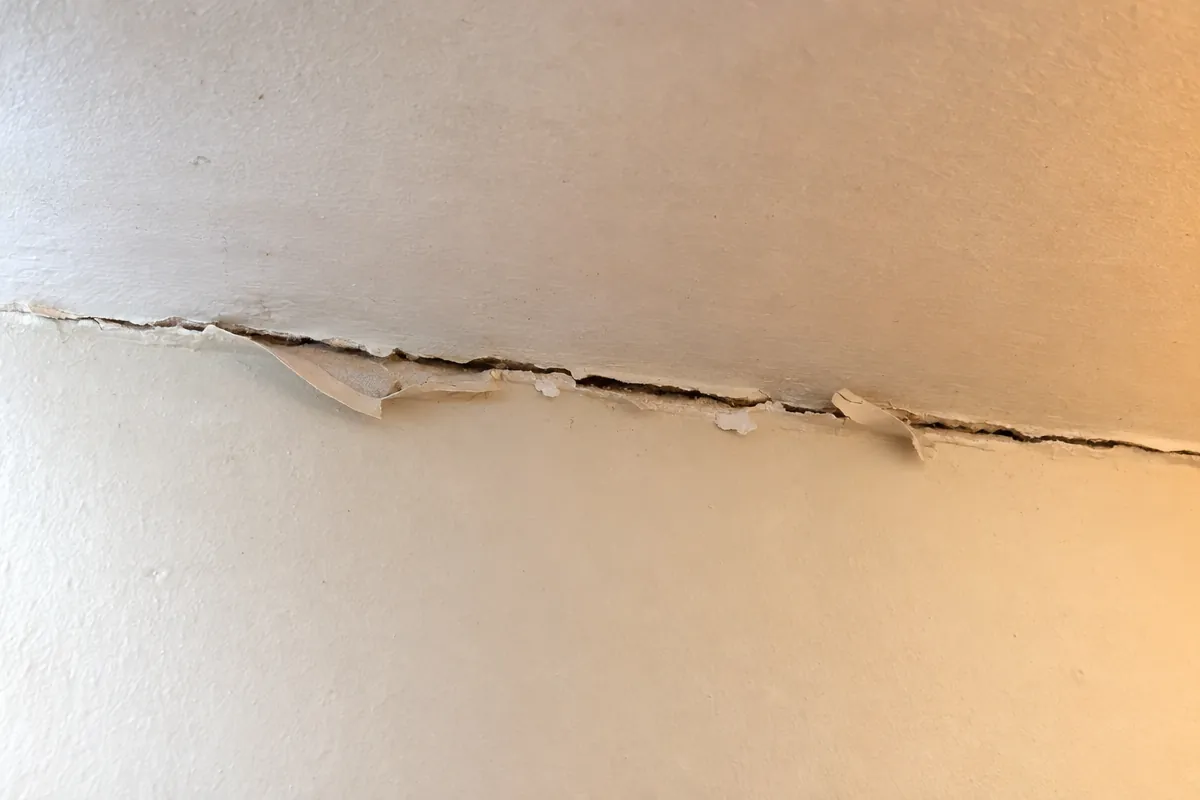
Which kind of crack is it?
Where a crack runs and how it looks usually point to what caused it.
| Crack | Likely cause | Usual repair |
|---|---|---|
| Hairline, random, on plaster | Age, small movements, broken keys nearby | Mesh tape and a skim coat; reattach if loose |
| Diagonal from a door or window corner | Settling or framing movement at the opening | Opened, taped and coated; watched for widening |
| Straight, along a drywall seam | Tape no longer stuck, or too little mud under it | Loose tape cut out, seam re-taped and finished |
| Where ceiling meets wall | Seasonal truss movement or framing shrinkage | Re-taped, or covered with trim fixed to one side |
| Long, sideways, with curling paper | Seam failure, often after moisture | Damaged paper removed, seam rebuilt |
What makes a filled crack split open again?
Compound alone cannot hold a gap together. When a house moves with the seasons, a crack that was only filled reopens in exactly the old place. A lasting repair bridges the crack with tape, usually fiberglass mesh for plaster and paper or mesh for drywall seams, and buries that tape under several thin coats spread far beyond its edges.
Moisture adds movement. With 47.59 inches of yearly rain and snow combined (NOAA, 1991-2020) and humid summers followed by dry, heated winters, wood framing and lath in Tarboro houses swell and shrink. Walls that were soaked and dried again, as happened in parts of town near the Tar River during the 1999 Floyd flooding, can show cracked seams long after the water left.
Are cracks in old plaster a different job?
Yes. A crack in plaster is often a sign that the plaster beside it has lost some of its grip on the lath. The repair starts by checking the area around the crack, reattaching anything loose with plaster washers, and only then taping and skimming the crack itself.
Tarboro's historic district has 364 contributing buildings from the late 18th to early 20th century, an era when interior walls were plastered rather than boarded. Cracks over doorways, along ceilings and at the corners of tall windows are typical in walls of that age.
What does a crack repair involve, step by step?
For a typical crack in drywall or plaster:
Scrape and widen
Loose material is scraped out and the crack gets a shallow V-groove cut along it so compound can grip.
Fasten anything loose
Loose drywall is screwed to framing; loose plaster is reattached to the lath.
Bed the tape
Mesh or paper tape is bedded over the crack.
Thin coats, wider each pass
Two or three thin coats are spread wider each time and sanded between.
Seal for paint
Primer is the final layer; it stops new compound from drinking up paint faster than the old surface.
Which cracks point to a structural problem?
Cracks over roughly 1/4 inch across, one that grows over a few weeks, stair-step cracking in brick or block, floors that have started to slope, or doors that start binding out of nowhere all point to movement in the structure. Those are a question for a foundation or structural contractor first. The wall repair comes after the movement is dealt with, or it will crack again.
Asked about cracks
Does fixing one crack mean painting the entire wall?
The repaired strip can be touched up, but fresh paint over a patch rarely matches old paint exactly. Paint from corner to corner for the most uniform look.
How long does a crack repair take?
Most of the time is drying between coats. A single crack can be finished over two short trips; several cracks in a room take a little longer.
Is a ceiling crack worse than a wall crack?
Not by itself. A ceiling crack near the wall is often seasonal truss movement. One that sags or is stained points to water.
Why does my crack open every winter?
Heated, dry air shrinks framing and lath. A taped repair handles that movement better than filler alone.
Do hairline cracks need a pro?
Not always. One or two can be a homeowner job. Many cracks in one room, or cracks in plaster that moves, are worth a pro's repair.
Which crack should be priced first?
Call the header number, or message a snapshot with a word about the room.
After you hang up, a drywall pro serving this county follows up to settle what the job covers and what it costs.